
Trains in Uzbekistan: how the Afrosiyob works and how to actually get a seat
The high-speed train is the reason a Silk Road trip no longer means days in a car. Here is how the network fits together, what the classes are like, why the good trains sell out, and how we make sure you have a seat.
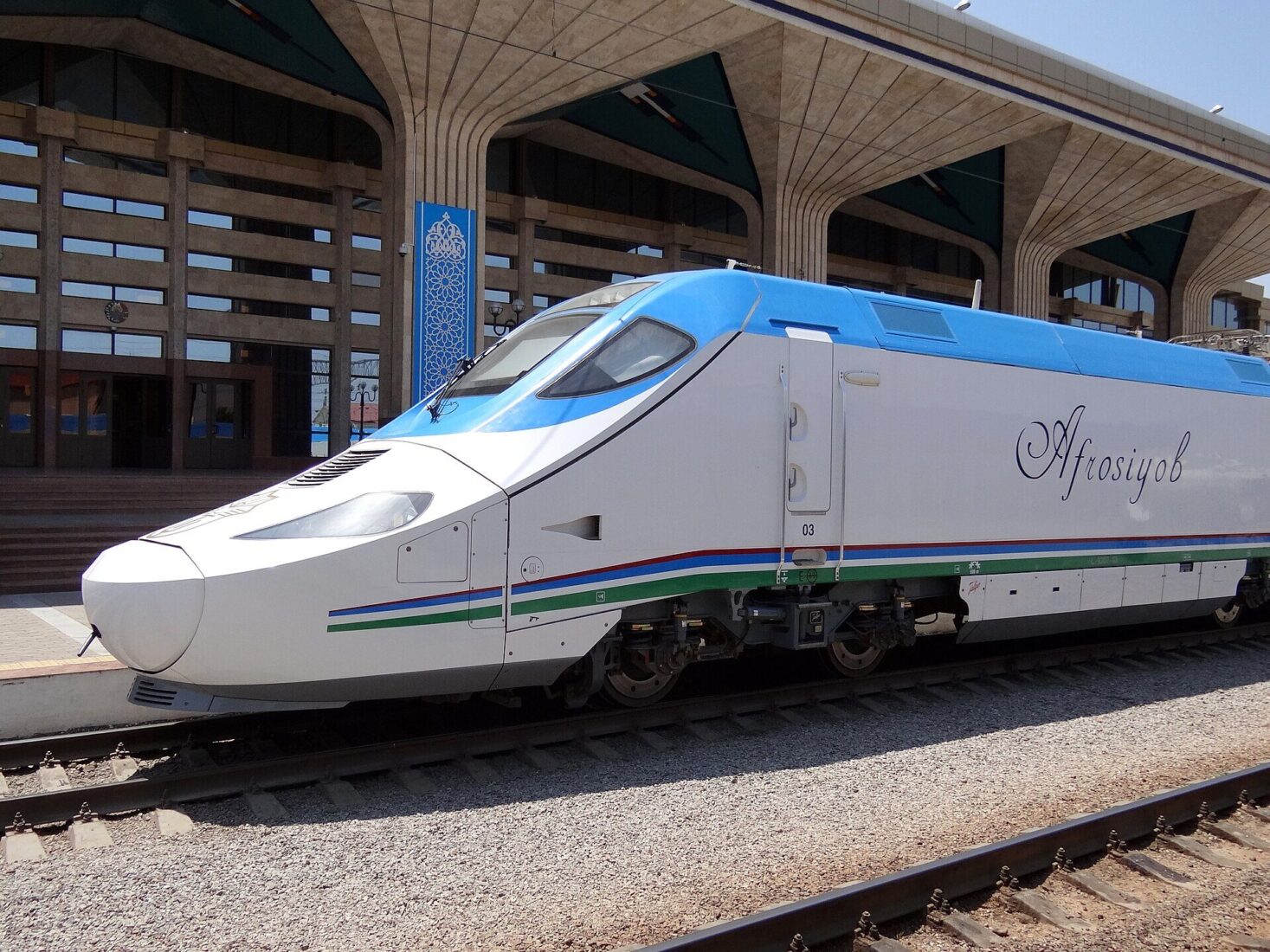
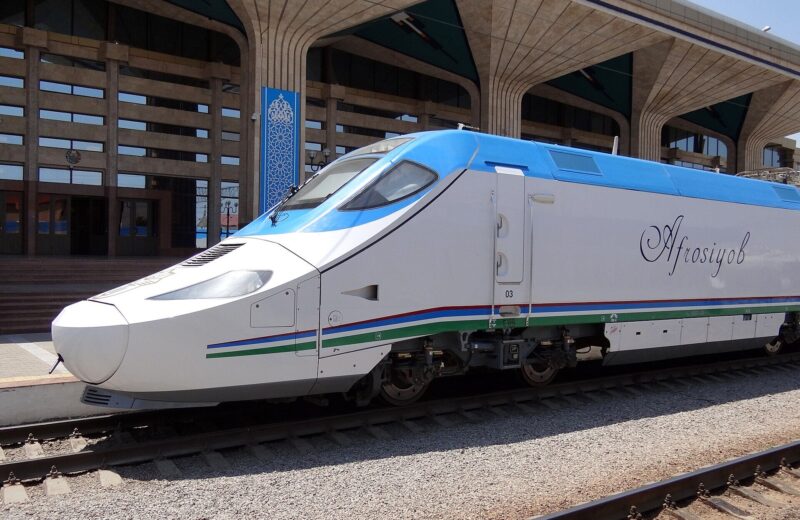
Ten years ago, the drive from Tashkent to Bukhara took the best part of a day. Today you sit in a quiet carriage with tea service and arrive before lunch. The Spanish-built Afrosiyob runs at up to 250 km/h and has quietly become the backbone of every good Uzbekistan itinerary — including ours.
The network in one paragraph
Think of a line running west from Tashkent: Tashkent → Samarkand → Bukhara, and onward across the desert to Khiva. The Afrosiyob covers Tashkent–Samarkand in about two hours and Samarkand–Bukhara in around an hour and a half. The last stretch to Khiva is longer — allow five to six hours on the day train, or we drive you across the Kyzylkum with photo stops at the desert fortresses, which many guests prefer.
The three trains you will meet
- Afrosiyob — the high-speed Talgo. Economy, business and VIP classes; all are comfortable, business adds wider seats and a snack. This is the one that sells out.
- Sharq — a conventional express, slower (Tashkent–Bukhara about six hours) but modern and perfectly pleasant. A good fallback.
- Night trains — sleeper carriages, useful for Tashkent–Khiva or Bukhara–Khiva if you like the romance of it. We only book 2-berth SV compartments for guests.
Why tickets are the hard part
Sales open roughly 45 days before departure and the popular morning Afrosiyob departures can be gone within days, especially April–May and September–October. Foreign cards work on the railway website some of the time; the app is in Russian and Uzbek; and seats are released in batches. This is why our tours include the tickets and why we offer ticket booking as a standalone service for independent travellers.
What travelling on it is like
Stations are modern and security is airport-style: passport and ticket checked at the entrance, bags scanned. Arrive 30 minutes before departure. On board there is a trolley with tea, coffee and snacks, and your luggage goes in racks at the end of the carriage (large suitcases fit; nobody minds). Announcements are in Uzbek, Russian and English. Windows are large, the ride is smooth, and the countryside — cotton fields, apricot orchards, the Zarafshan river — is the best introduction to the country you can get.
Our practical rules
- Take the earliest departure. The light is better at your destination and you get a full day.
- Keep your passport in your hand luggage — it is checked twice.
- Book business class on the longer legs if you can; the difference is small in price and big in comfort.
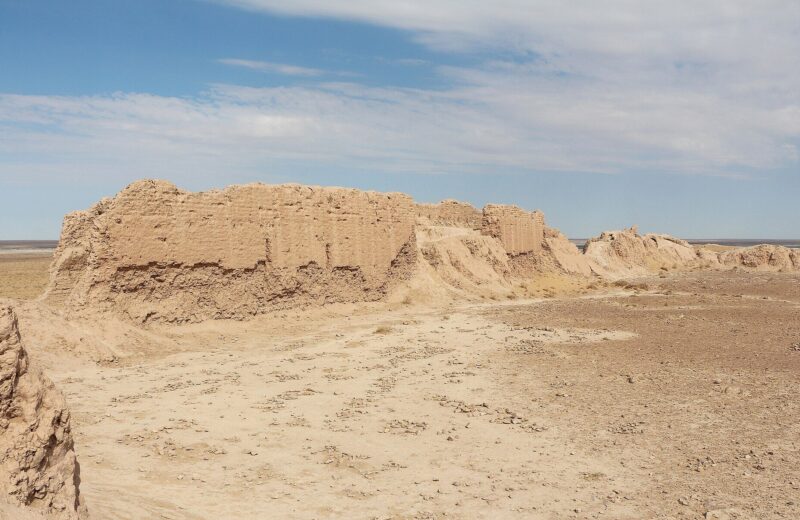
- For Bukhara → Khiva, compare the train with a private car: the car is slower but stops at Ayaz-Kala and Toprak-Kala, the mud fortresses that are the real reason to cross the desert.
- Download your e-tickets before you travel. Phone signal in the desert is patchy.
Tashkent metro — a bonus
Not intercity, but worth a line: the Tashkent metro is one of the most beautiful in the world, built in the Soviet period with chandeliers and cosmonaut mosaics. A ride costs a few cents and photography has been allowed since 2018. Kosmonavtlar and Alisher Navoi stations are the ones to see.
Frequently asked
For the Sharq and night trains, usually yes. For the Afrosiyob in high season, almost never — book ahead or let us do it.
Yes. Racks at the carriage ends take large suitcases; smaller bags go overhead.
Very. Stations are staffed and scanned, carriages are attended, and fellow passengers are mostly families and business travellers.
Tours that follow this guide
Experiences mentioned here
 Transfers Instant booking
 Transfers Instant booking
Want this planned for you?
Tell us your dates and interests — we build the route around what you just read, and answer every question first.
More guides
 Practical
 Planning
 Planning