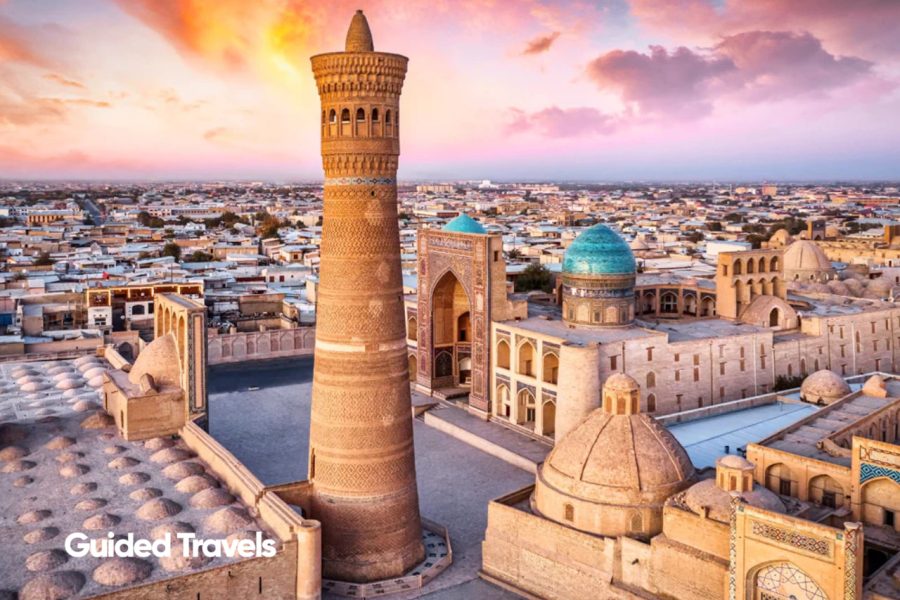
Khiva is a beautiful oasis city with ancient walls, minarets and unique clay buildings. Within the framework of the XI session of the Organization of Islamic Cooperation (OIC) in Baku, Khiva was declared as the Tourism Capital of the Islamic World in 2024!
Khiva is over 2500 years old. If you want to plunge into history and see the true beauty of the ancient East, then welcome to Khiva.
Famous Sights
The ancient Khiva is included in the UNESCO World Heritage List. It means that all the attractions are protected by the worldwide organization.
✔️ Ancient mosques and madrassas, minarets, mausoleums – there are more than 100 of them in Khiva;
✔️Palaces and residences of Khiva rulers;
✔️ Ancient caravanserais and baths;
✔️ State Puppet Theater and Avesta Museum.
Video about Khiva
Step into the timeless beauty of Khiva, one of Uzbekistan’s best-preserved Silk Road cities. This captivating video guides you through:
Itchan Kala – the majestic walled inner city, a UNESCO World Heritage Site
Ornate mudbrick architecture, beautiful blue‑tiled minarets and domes
Serene sunset views from atop ancient ramparts
Iconic structures like Kalta Minor, historic mosques, madrasahs, and palaces
Quiet alleyways that whisper tales of traders, mystics, and camel caravans
Photo gallery
Climate
Khiva has a dry, desert-like climate. Summers are hot and often accompanied by strong winds, while winters can be quite cold, with temperatures frequently dropping below 0°C. Don’t forget to pack warm clothing if you’re visiting in winter — you’ll definitely need it!
Gifts and souvenirs
Like in many cities across Uzbekistan, Khiva offers a wide range of souvenirs — but some items are unique to the Khorezm region and can’t be found anywhere else. One special example is the handmade Khorezm doll, deeply connected to Khiva’s ancient puppet theatre tradition, which dates back nearly 2,000 years. Puppet-making has been passed down for generations, and the love for puppet shows is still alive today.
Another fascinating local item is the Chugurma, a traditional Khorezmian hat. Though it looks large and heavy, it is actually lightweight and incredibly practical. Thanks to its unique design, it keeps the head cool in summer and warm in winter by creating a natural microclimate. In ancient times, the Chugurma was so valuable that its price matched that of a camel — making it a luxury item reserved for the wealthy. Today, it’s more affordable and remains a favorite among fans of unique, traditional headwear.
Khiva is also renowned for its woodcrafts. Local artisans skillfully produce everything from miniature chess sets to intricately carved staves and grand wooden doors. Whatever your taste, you’re sure to find a piece of craftsmanship that captures the spirit of Khiva and makes for a memorable souvenir.
Сuisine
The recipes is changing from region to region and if you taste the same dish in different cities, you will be surprised how much the taste varies! Khorezm cuisine is one of the most unusual in Uzbekistan, because the natural conditions are quite difficult there. You can often find one unusual dish… It is called “tukhum-barak”, which literally translates as a boiled egg. What is unusual, you may ask? The finished dish resembles dumplings in shape, and its way of cooking is quite unusual. The dough is filled with raw eggs and very quickly thrown into the boiling water before it drains. It is said that this dish was prepared for the khans before their visits to the harems. Inaddition, the favorite dish of the local people is fish. It is no exaggeration to say that the fish is prepared incomparably and even if you do not like seafood, you will not be able to resist the local fish. One of the iconic dishes is Shivit Osh or Green Lagman (noodle). Locals use Shivit greens to make noodles green. It is served with katyk (sour milk) and meat in vegetable sauce.
Photo zones
An integral part of any trip is capturing unforgettable moments — and Khiva offers a dreamlike backdrop for every photographer, from casual smartphone users to professional shutterbugs. In this section, we’ll guide you through the most scenic and photogenic spots in the city to help you take truly stunning shots. It is impossible to make a bad photo on the territory of Ichan-Kala fortress. Everything around is literally saturated with the atmosphere of the past and walking along these streets, you feel the spirit of the time. There are certain places where you can get special shots. One of such places is Juma (Friday) Mosque, built in the X century. Its distinctive feature is that it does not have an entrance and domes, the roof of the building is supported by 213 columns of different sizes, shapes and even made in different centuries.
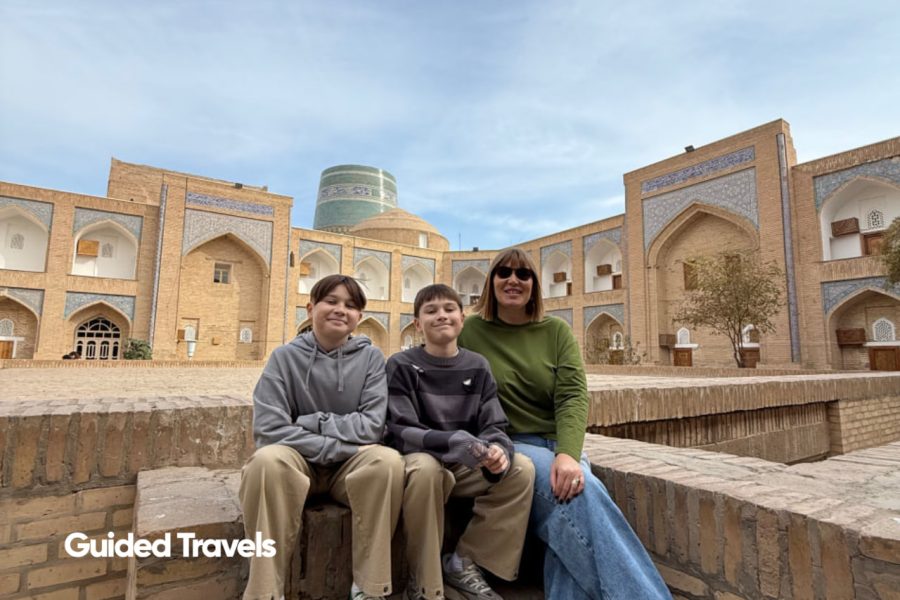
Among Khiva’s most iconic landmarks is the Kalta-Minor Minaret, located near the western gate, Ota-Darvoza. Originally intended to be the tallest minaret in Central Asia, construction was halted after the death of its patron, and it was never completed. Despite its unfinished state, its vibrant turquoise tiles and massive base make it one of the most photogenic and recognizable sites in the city.
History
Khiva is one of the oldest cities in Uzbekistan, founded 2500 years ago. Also within is Ichan, the only city where the castle is located, a real fortress dating back to the Middle Ages. According to legend, the city appeared around the Heyvak well, which was dug by the order of Som, the son of Prophet Noah, mentioned in the Bible.
Everything in Khiva feels unique — from the cuisine and local dialect to the people and architecture. Much of the city has been preserved in its original form, offering visitors a rare chance to step back in time. The stone-paved streets, elegant minarets, and turquoise domes of mosques and madrasahs rise like chess pieces across the skyline, creating a surreal, harmonious atmosphere.
Even modern buildings in Khiva pay tribute to its historical legacy, blending seamlessly with the city’s ancient aesthetic.
In 1990, Khiva’s inner city, Itchan Kala, was recognized as a UNESCO World Heritage Site for its remarkable preservation and cultural significance — a true open-air museum of Central Asian history and architecture.



 English (Global)
 Deutsch
  Italiano