
Khiva in a day: an insider’s walk through Itchan Kala
I grew up inside these walls. Most visitors give Khiva half a day and leave with the photo everyone has. Here is how to spend a full day — where to be at sunrise, which minaret to climb, and where the old town still lives.
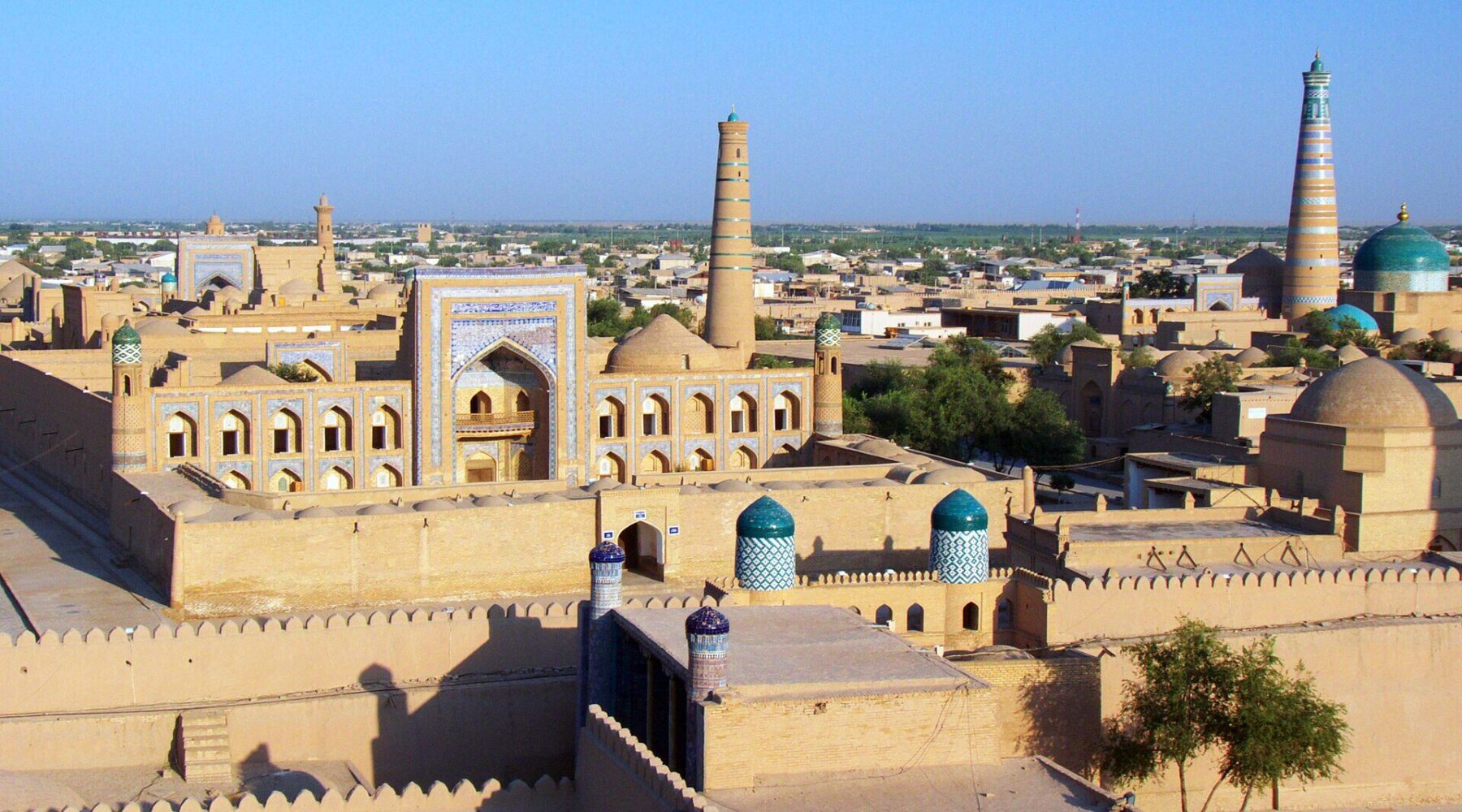
Khiva is the only Silk Road city that survived whole. Samarkand has monuments; Bukhara has a living old town; Khiva has an entire walled city — Itchan Kala — where the streets, the mosques, the palaces and the houses are all still there, in mud brick and turquoise tile, the way they stood in the nineteenth century. It was the first site in Uzbekistan on the UNESCO list, and it is my home town.
Start before the ticket office opens
The west gate (Ota Darvoza) is open all night and the old town is a living neighbourhood, so there is nothing stopping you walking in at 6:30. Do it. The light comes over the eastern wall, the streets are empty, bread is being delivered on bicycles and the stray cats own the madrasa steps. By 9:30 the first groups arrive from the hotels outside the walls and the atmosphere changes completely.
The walk, in order
- Kalta Minor — the fat, unfinished turquoise minaret just inside the west gate. The khan who commissioned it died in 1855 and nobody finished it; it is the most photographed thing in the city and best seen with nobody in front of it, which means early.
- Kunya Ark — the old fortress-palace of the khans. Climb the watchtower (small fee) for the classic view across the rooftops to the Islam Khoja minaret. Go up before 9:00 or after 17:00; midday the tower is a queue.
- Juma Mosque — a forest of 213 carved wooden columns, some of them a thousand years old, under a flat roof with light shafts. Cool, dark and silent. One of the great rooms of Central Asia.
- Islam Khoja minaret — at 56 metres the tallest in the city and the one you can climb. 118 steps, narrow, dark and worth every one of them. Not for anyone who dislikes tight spaces.
- Pahlavan Mahmud mausoleum — the spiritual heart of Khiva, with the richest tilework in the city and local families coming to pray. Shoes off, quiet voices.
- Tash Hauli palace — the nineteenth-century palace with the harem courtyard: painted ceilings, carved columns, blue tiles floor to roof. Give it time.
Where the old town still lives
Walk the lanes between the eastern wall and the Tash Hauli: this is where people actually live. Children playing, carpets being beaten, bread ovens in courtyards. The craft workshops along the main street — woodcarving, silk carpets, the famous Khiva fur hats — are real workshops, not souvenir shops, and the carvers are happy to talk.
Lunch
Khorezm has its own kitchen. Order shivit oshi (green dill noodles with stew) and tukhum barak (egg-filled dumplings) — you will not find either anywhere else in the country. There are two or three family-run courtyard restaurants inside the walls that we use; your guide will know the one that is open and good that season.
The afternoon
After lunch the sun is high and the light is flat; this is the time for the museums inside the madrasas (the one on Khorezm music is small and charming) and for a rest if you are staying inside the walls. Come back out at 17:00.
Sunset
Walk the city walls on the northern side — you can climb up near the north gate — and watch the whole town turn gold. Then find a rooftop terrace: several hotels and cafés have them, and a pot of green tea as the minarets light up is the best end to a day in Uzbekistan that I know of.
Practical
- One ticket covers the city and most monuments; the minaret and the watchtower are separate.
- Stay inside the walls if you can. Hotels in converted madrasas and merchant houses are the point of coming here.
- Two nights lets you do the sunrise walk properly and see the desert fortresses (Ayaz-Kala, Toprak-Kala) in between.
- Khiva is small: everything above is within a ten-minute walk of everything else.
Frequently asked
One full day for the old town, two if you want the desert fortresses and a slow morning. Most of our tours give it two nights.
Yes — it is the most complete historic city in Central Asia. Break the drive at the Kyzylkum fortresses and the day becomes a highlight rather than a transfer.
Tours that follow this guide
 Flagship tour
 No long drives Any date
Experiences mentioned here
 Guides Instant booking
 Guides Instant booking
Want this planned for you?
Tell us your dates and interests — we build the route around what you just read, and answer every question first.
More guides
 Practical
 Planning
 Planning